2.2. Bacteria and toxins. 3:08
Bacterial spores and their toxins
Some bacteria form spores in adverse conditions. The spore protects the bacterium from adverse environmental factors, from heating, drying, exposure to chemicals or radiation.
Spores are a stage of calm for bacteria. They can remain viable for a very long time until they are in favourable conditions, where the spore swells, and when they consume spare food materials they start to grow.
When the spores wall explodes, a new cell is formed.
Spores are difficult to destroy, even with appropriate cooking methods. For example, Bacillus cereus can survive successfully even in cooked rice and reproduce under favourable conditions. Therefore, the main prevention is the quickest possible cooling and storage of products at low temperatures.
- Spores can be destroyed by prolonged storage at very high temperatures such as sterilisation.
Bacterial toxins
- Toxins also poison food.
- Some bacteria produce poisons called toxins.
Toxins
Toxins also begin to produce as bacteria multiply in food. Such toxins are called exotoxins. (For example, Bacillus сereus, Staphylococcus aureus).
They are hard to destroy because they are not afraid of high temperatures.
- Bacteria that produce toxins in its own body are called endotoxins.
Destruction of bacteria
Two main methods are used for the destruction of micro-organisms:
- Chemical method,
- Heat.
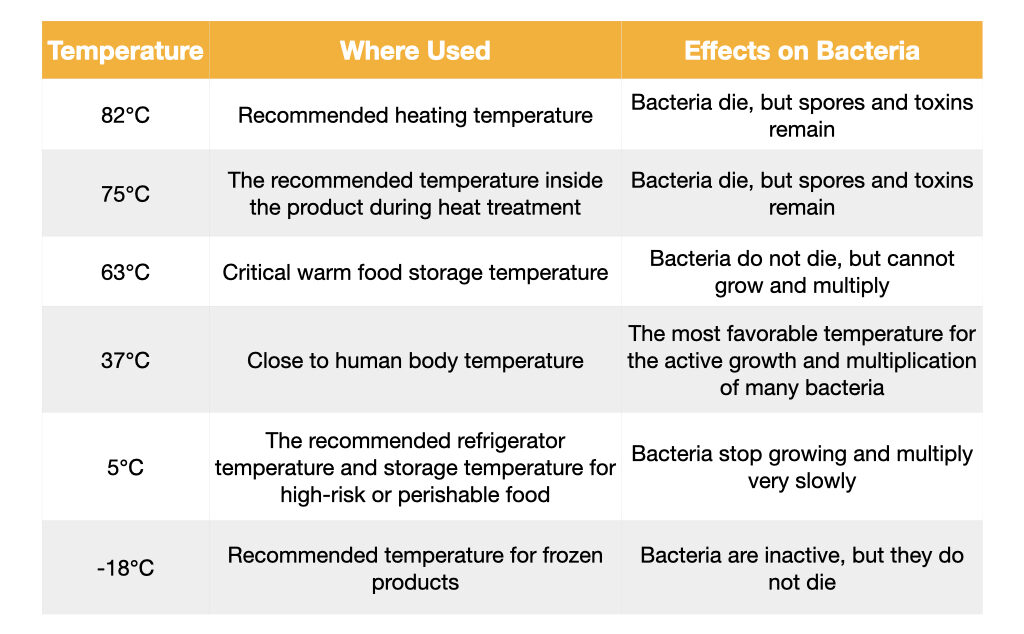
How temperature affects bacteria: